
RAISE Wellness Program Expands Community Connections for Refugees
What community integration looks like at RAISE in practice
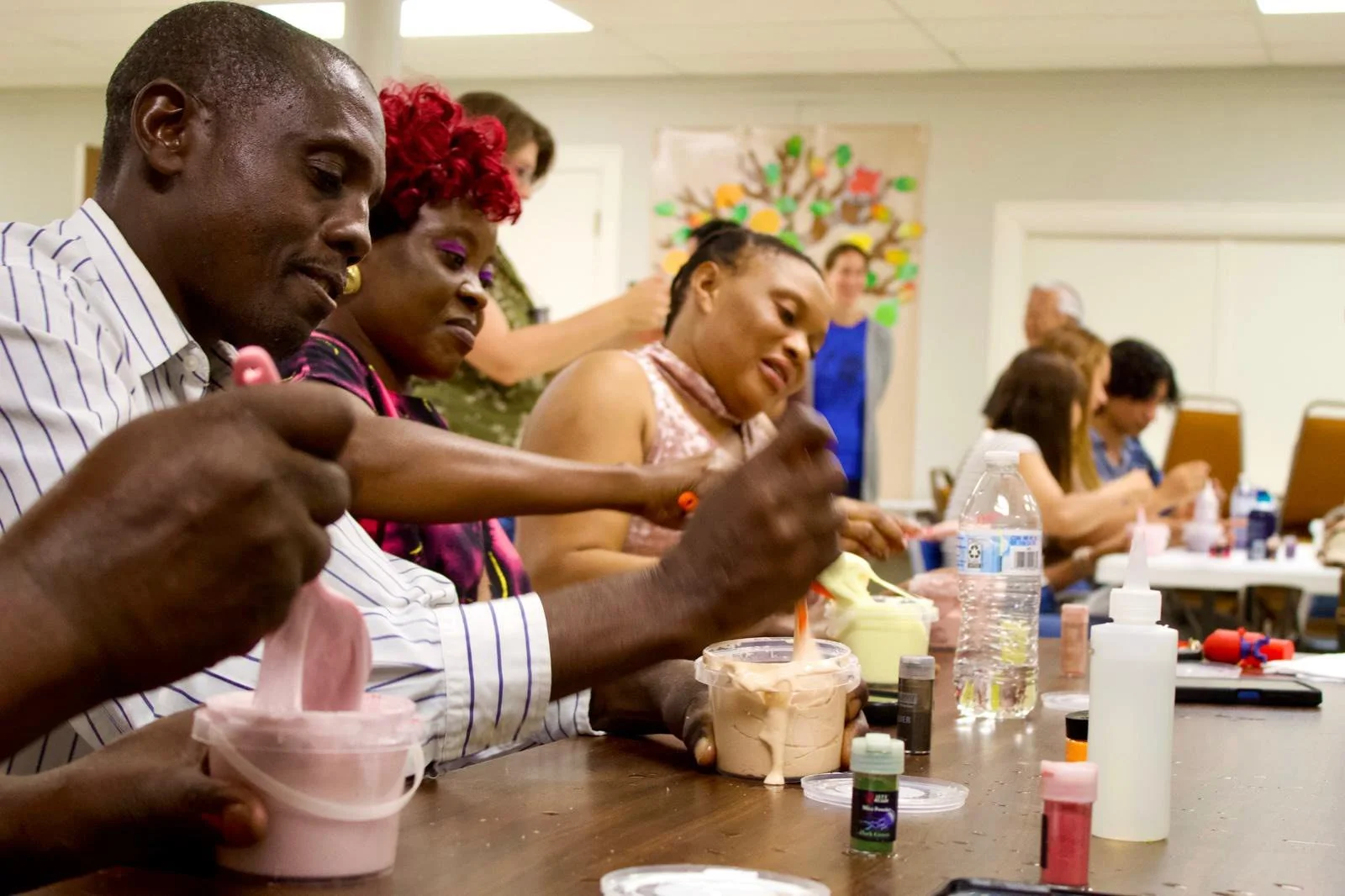
Photo Courtesy of RAISE
By: Aman Rahman
At Refugee and Immigrant Services and Education (RAISE), a local resettlement provider in Joplin, community integration is central to its work. Through programming, RAISE connects refugee clients with community members who support their well-being as they navigate through a new environment.
The Health and Wellness Program centers on creating spaces that support community integration, peer‑to‑peer connection and skill‑building for refugee clients. Funded by a Refugee Health Promotion grant from U.S. Committee for Refugees and Immigrants (USCRI), the Wellness program helps participants build relationships with others. Activities like cooking classes, candle-making and sports not only offer the opportunity to learn a new skill, but it also allows clients to openly share their experiences and needs with others.
In one session, a local mental health counselor, who also runs a slime and ice cream shop, facilitated a slime-making activity for RAISE clients. During the session, participants mixed and shaped slime, while the counselor guided the conversation toward themes of perseverance and overcoming. Many clients expressed that they enjoyed participating in this activity with others in the program.
For Becca Lasseigne, the Wellness Groups Facilitator, opportunities to integrate clients with each other and the community are important. During this year, Becca plans to hold focus groups, offering a space for already connected clients to discuss their experiences. These focus groups will bring clients together through an activity, giving them a chance to share their needs with their peers.
Over her four years at RAISE, Becca has seen relationships form through the program’s activities. One story stands out to Becca. Barb, a host for the group cooking classes, first came to the United States as a refugee from Ghana in the 1980s. Over the years, Barb married a Marine, had several children and became a classically trained chef. She now leads cooking classes at RAISE and has become a trusted presence to offer mentorship and guidance to the women who participate.
"Barb is always encouraging the group to volunteer and work in the community,” Becca said. “She really has this vision of refugees and immigrants giving back to feel more part of the community.”
The Wellness program is part of a larger organizational effort to help refugees and immigrants thrive in their communities. RAISE also runs a range of educational, development and community‑engagement initiatives. Refugees from over 10 national backgrounds have participated in RAISE outreach events. Most recently, the Nation-to-Nation Transformation program sets up in a parking lot across the street once a month, offering free haircuts, braiding and other grooming services to community members. RAISE has seen this ignite a passion for refugees to seek training in barbering, manicuring and braiding to continue providing these services to others.
One refugee woman shared with RAISE that when she first arrived, she questioned her ability to be useful. Through community outreach like the barbershop events, she expresses feeling a proud sense of dignity for herself and those she serves. This experience speaks to the purpose behind the work of RAISE.
“Everything we do at RAISE is for greater purpose of connecting our people to healthy people in the community who care about their dignity, well-being and want to help them be successful,” Becca said. “That is always there at the forefront at any of our services and anything that we are doing.”
Through these activities, participants have reported feeling more confident and connected to each other. Becca expresses that Joplin has long been welcoming and supportive of refugees and hopes to continue to see these relationships form.